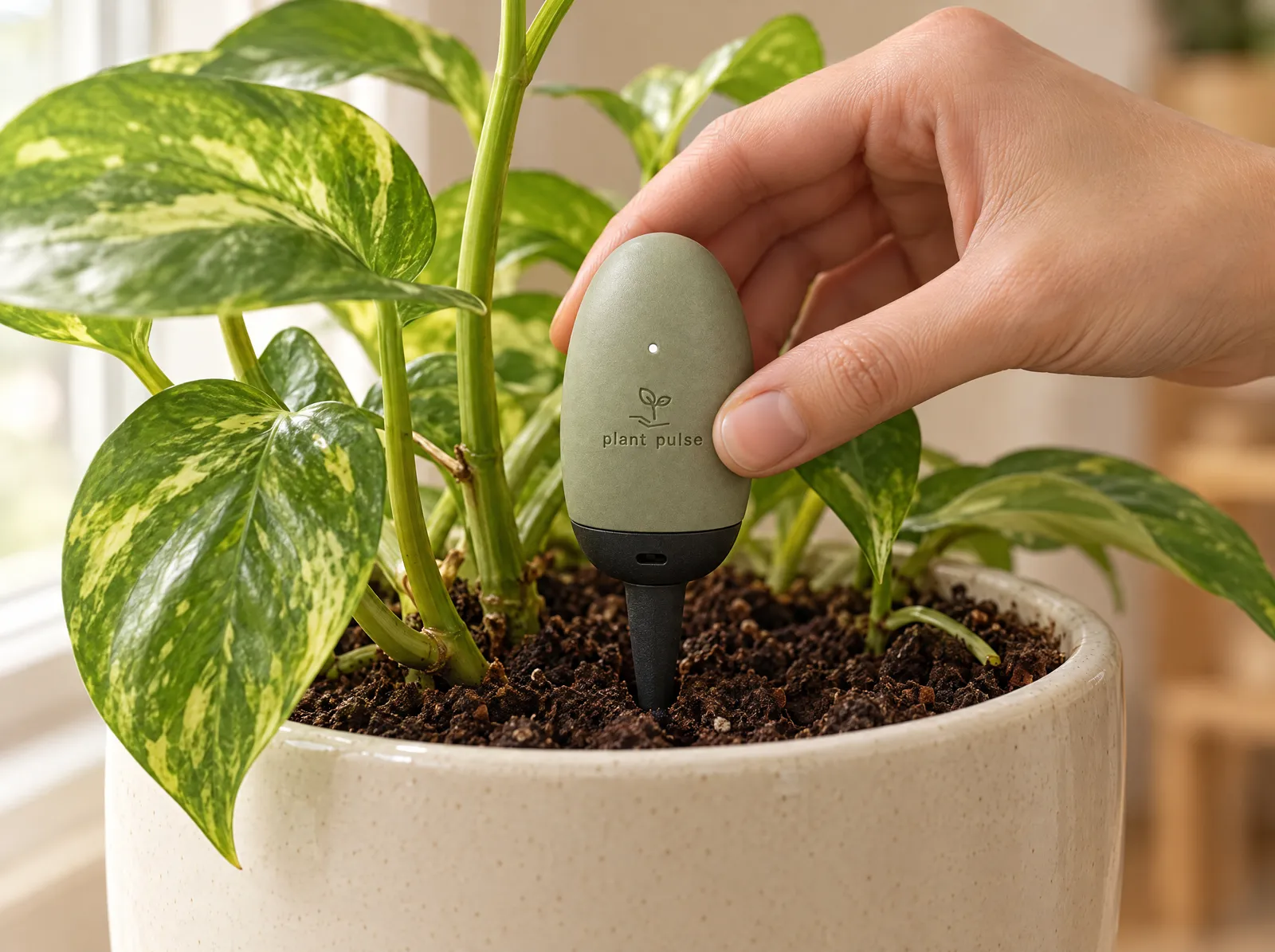
Early access · Built on open-source hardware

Know what your plants need.

A beautifully designed soil sensor and a calm app that tell you when your plants need water, light, or attention — before they start visibly struggling.

Plants can't tell you they're thirsty. They signal it slowly — in the soil, the light, the air around them. Plant Pulse listens for those signals and tells you what they mean, in plain words.

How it works

Three small steps. Then it mostly stays out of your way.

  1. 01

    Place it in the pot

    Press the sensor into the soil of any potted plant. No wiring, no hub, no tools — the pebble sits low and quiet, the probe does the work underneath.

  2. 02

    Pair with your phone

    Your phone finds it over Bluetooth. A short calibration teaches it what “dry” and “wet” mean for your specific pot and soil — so readings are relative to your plant, not a lab.

  3. 03

    Know what it needs

    Open the app and you see what needs attention first, with the reason in plain language. Not a wall of charts — a short, honest answer, and how fresh the reading is.

Trends, not snapshots

It learns how your plant actually dries out.

One reading tells you very little. Plant Pulse watches the curve between waterings, so its advice reflects your plant, your pot, and your room.

Watering logged
Milo · Pothos · last 14 days
Soil moisture
24h7d30d90d
Comfortable for a pothos 2 weeks ago Today Forecast

Milo usually dries out about 6 days after watering. At this pace it'll want water around Thursday. Nothing to do today.

Illustrative example. Moisture is shown on a relative scale calibrated to your pot — not lab-grade volumetric water content.

What it measures

Four readings. One calm summary.

Soil moisture

Calibrated to your pot and soil, shown as a simple very-dry-to-very-wet scale — not a number you have to decode.

Light awareness

Is that spot giving it the bright, indirect, or low light it actually wants?

Temperature & humidity

Spot the draughty window, the dry winter air, the radiator that's a little too close.

Long battery life

One coin cell. The sensor sleeps between readings instead of polling every second.

  • Explained recommendationsA deterministic care model reads the trend and shows its reasoning — not a guess dressed up as certainty.
  • Low-noise alertsQuiet hours and cooldowns. Told once when it matters — never nagged every few hours.
  • Historical patternsDrying time, light consistency and trends from 24 hours to 90 days.
  • Honest freshnessEvery reading shows its age, so you always know whether it's current.
  • Photo-assisted diagnosis LaterPossible causes to investigate from a leaf photo plus your sensor history — never a definitive verdict.
The hardware

Designed to disappear into the pot.

A smooth, matte river stone above the soil. A slim capacitive probe below it. Nothing that looks like it belongs in a lab.
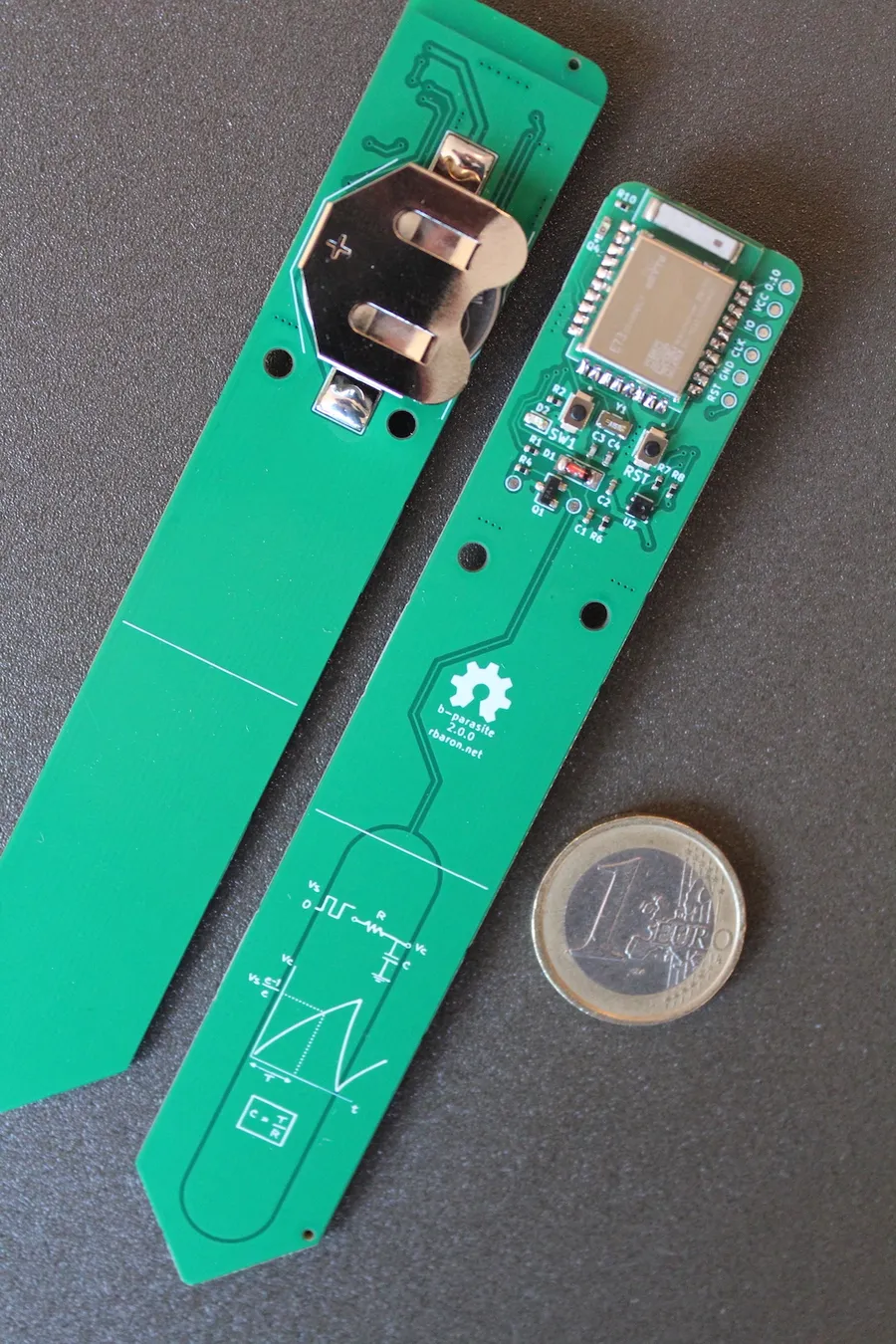
  • Matte, pebble-shaped shellNo visible screws, no industrial edges.
  • Discreet status lightA single soft dot — not a blinking dashboard.
  • Ambient sensingLight, temperature and humidity measured above the soil.
  • Capacitive soil probeNo exposed metal electrodes to corrode in wet soil.
Two open-source b-parasite sensor circuit boards: the back with a coin-cell holder, and the front with a Bluetooth module and printed capacitive probe, next to a one-euro coin for scale.
b-parasite board · photo © rbaron, CC BY-SA 4.0
What's inside

Proven open-source electronics, not a black box.

Under the shell is the b-parasite board — an open hardware design (CC BY-SA 4.0, MIT-licensed firmware) used by thousands of makers. We didn't reinvent the sensing. We focused on the enclosure, the calibration, and the care insights on top of it.

Connectivity
Bluetooth Low Energy
Power
One CR2032 coin cell
Senses
Soil moisture, light, temperature, humidity
Hub required
No
Multiple plants

One sensor per plant. The whole home, at a glance.

Add a sensor to each pot and see every plant in one list — with the ones that need you surfaced first.

FigLiving roomWater soon
OliveBy the windowNeeds more light
MiloPothosDoing well
SansaSnake plantDoing well
Trust & privacy

Built honestly, on an open foundation.

Your data is yours

Plant and sensor data is private by default. Export or delete it whenever you want.

Open-source foundation

Nothing proprietary hiding how it actually measures your plant.

Honest about its limits

Relative moisture, not lab-grade readings — and we say so. Claims match what the hardware can do.

No camera, no microphone

The sensor measures soil, light and air. Nothing else.
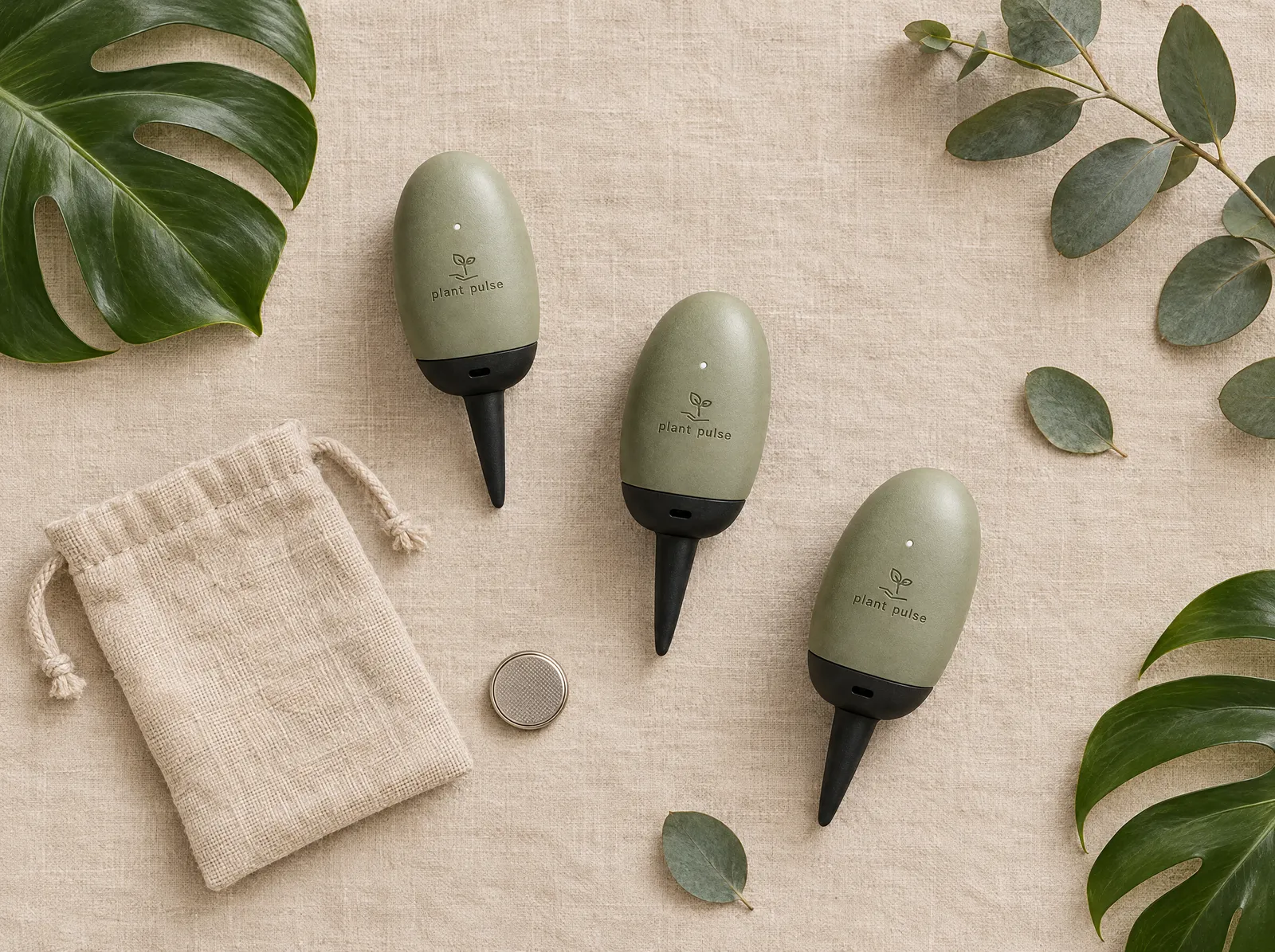
Three sage-green Plant Pulse sensors laid out on linen beside a cotton pouch, a coin-cell battery and a few leaves.
Planned starter kit
$49 one-time
  • One Plant Pulse sensor
  • Mobile app for iOS and Android
  • Plant dashboard and essential care alerts
  • Historical trends
Join the waitlist for early access

Still in hardware bring-up — this is our early-access plan, not an active store. Extra sensors can be added per plant. A future optional subscription may add longer history and household sharing; core sensor features will never be locked behind it.

FAQ

Good questions.

Is Plant Pulse available to buy right now?
Not yet. We're in early hardware bring-up. Joining the waitlist gets you early access and a say in what ships first.
Is the hardware really open source?
Yes. The sensor is built on the open-source b-parasite design (CC BY-SA 4.0 hardware, MIT-licensed firmware). We didn't reinvent the sensing — we focused on the enclosure, the app and the care insights on top of it.
How accurate is the moisture reading?
We show a relative scale — very dry to very wet, calibrated to your specific pot — rather than claiming lab-grade volumetric water content, which this hardware isn't validated for.
Do I need Wi-Fi at the plant's location?
No. The sensor talks to your phone over Bluetooth when you open the app. Continuous background monitoring without opening the app isn't something we promise yet — we'd rather be upfront about that than overclaim it.
Which plants does it work for?
Any potted plant. We're building out a species database with real care guidance so recommendations are specific to what you're growing, not one-size-fits-all.

Get early access.

Hear when Plant Pulse is ready, get early-access pricing, and — if you like — help us test it.

You're on the list

We'll email you as early access opens up.